HEALTH AND CARE

Lighting to support those who need it most
Prioritising comfort and well-being alongside the needs of medical staff
Great lighting in hospitals is paramount for several reasons. We believe that light directly affects patient outcomes, as well-lit environments can help to reduce stress and aid in the healing process. We design solutions that support the work of healthcare professionals and to aid in providing accurate diagnoses and treatments. Infection control is enhanced through well-designed lighting that supports intensive cleaning, thus improving overall safety. Moreover, appropriate lighting design in hospital spaces can enhance comfort, reduce anxiety, and help to create a positive healthcare experience for patients and staff alike.
LIGHTING THE WAY
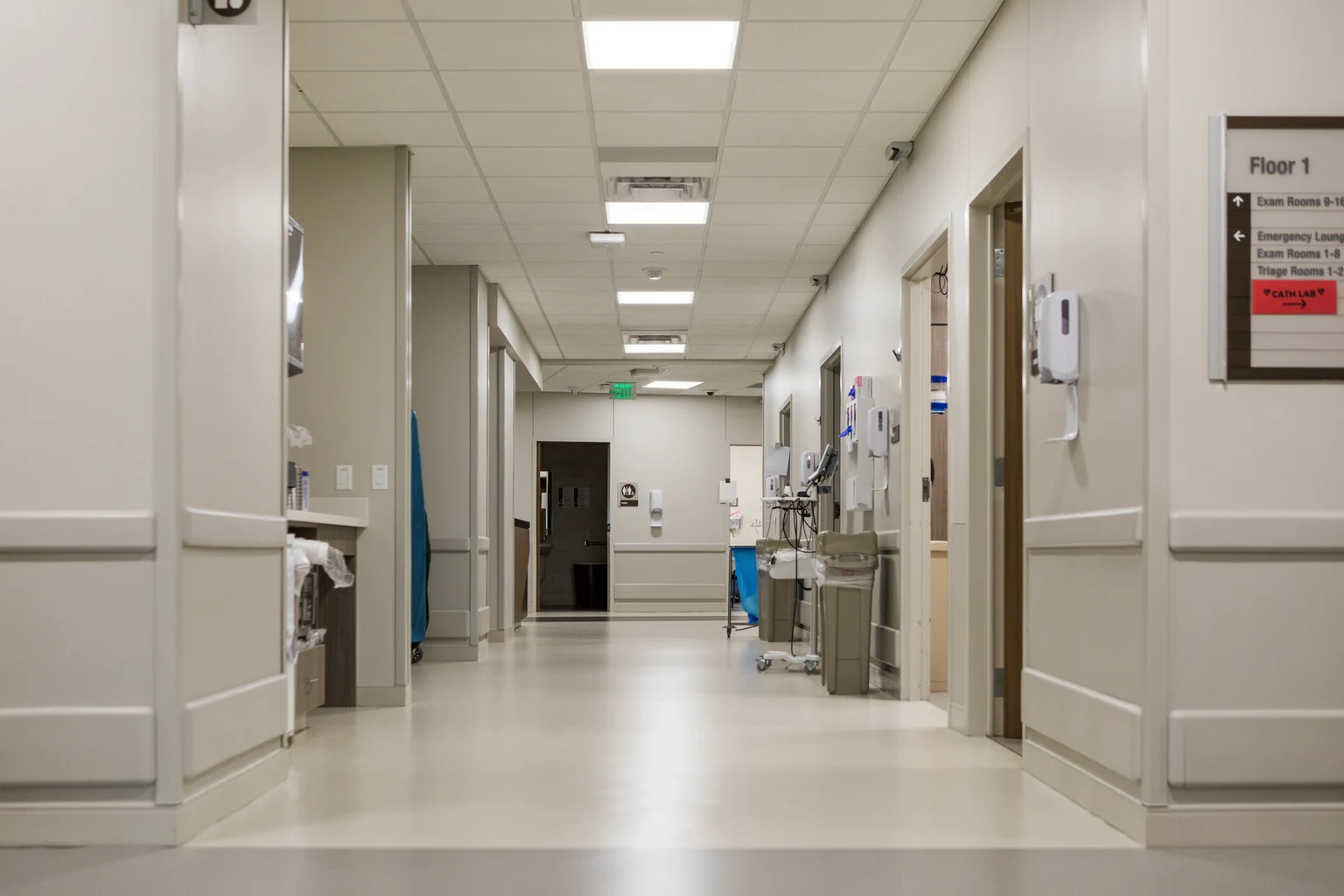
Corridors and stairwells
Corridors and stairways are high traffic spaces with an extremely broad range of people frequenting the space. In alliance with EN 124564-1, it’s essential these spaces are lit mindfully. A uniform lit effect in these areas ensures that recumbent patients don’t experience a variant of stroboscopic lighting effects whilst travelling the roadway.
Another important element here is cylindrical illumination for security support and facial recognition. Cylindrical illumination helps remove harsh shadowing, which can hinder the recognition of people within this space. Additionally, EN 12464-1 lists two different illumination levels for patient corridors. Generally speaking, we should be targeting between 100- 200 lux during the day and 50 lux at night.



THE ROAD TO RECOVERY
Offering comfort
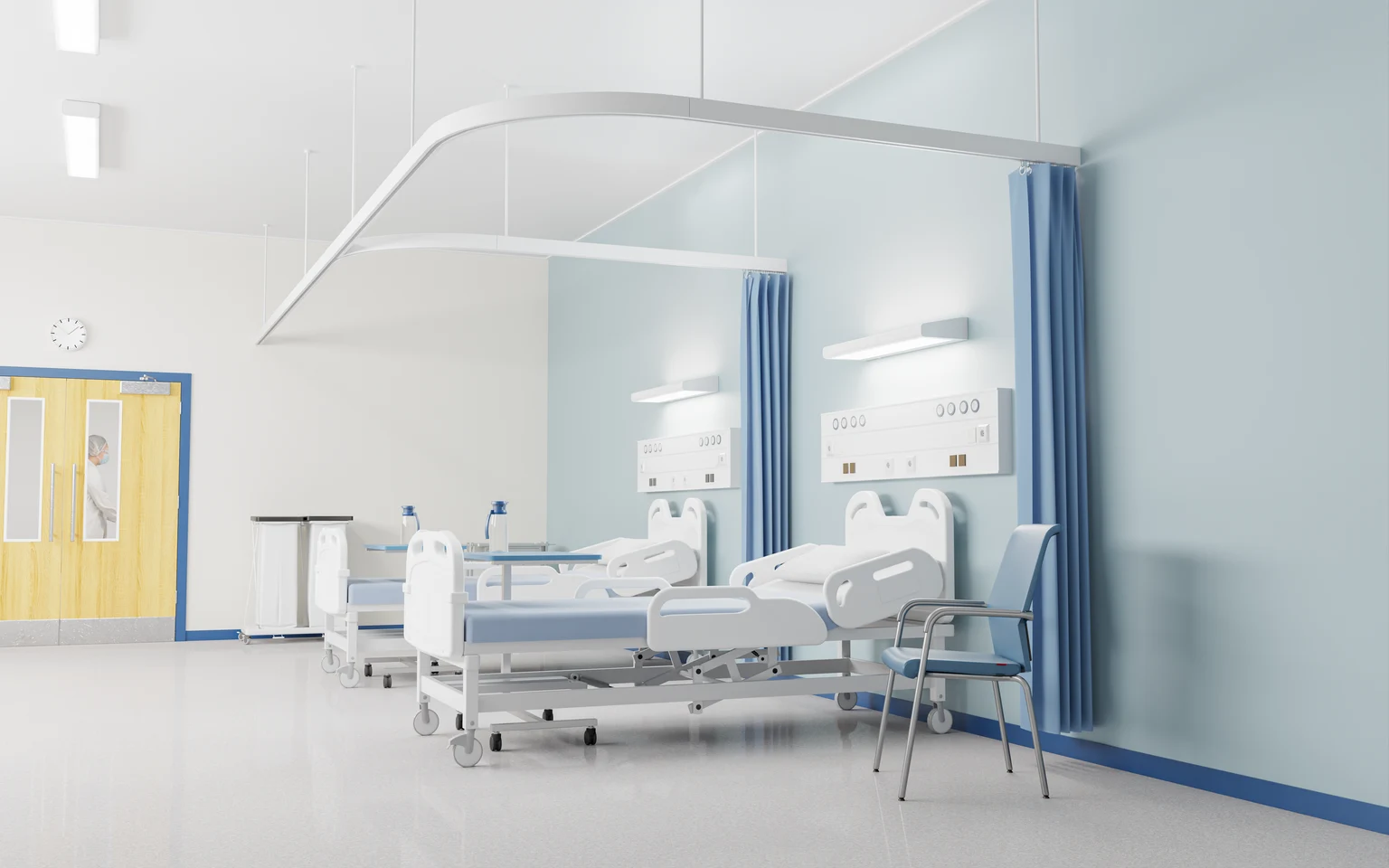
Lighting in wards should take into account peoples potential unfamiliarity of a new environment as well as reducing visual discomfort. Discomfort glare should be modeled to ensure the value is UGR 19 or less. Lighting control can also help patients and staff manage their personal lighting levels. Nightlighting has a variety of benefits - patients often require low level lighting (especially psych or childrens wards) as a comforting factor without disturbing others.
Where patients are ambulant, light should aid safe passage to/from their bed to a bathroom e.g. with no or minimal disruption to other patients. Staff also benefit from nightlighting as it enables them to discreetly carry out their ward rounds and check up on patients at night as the patient will likely be asleep.